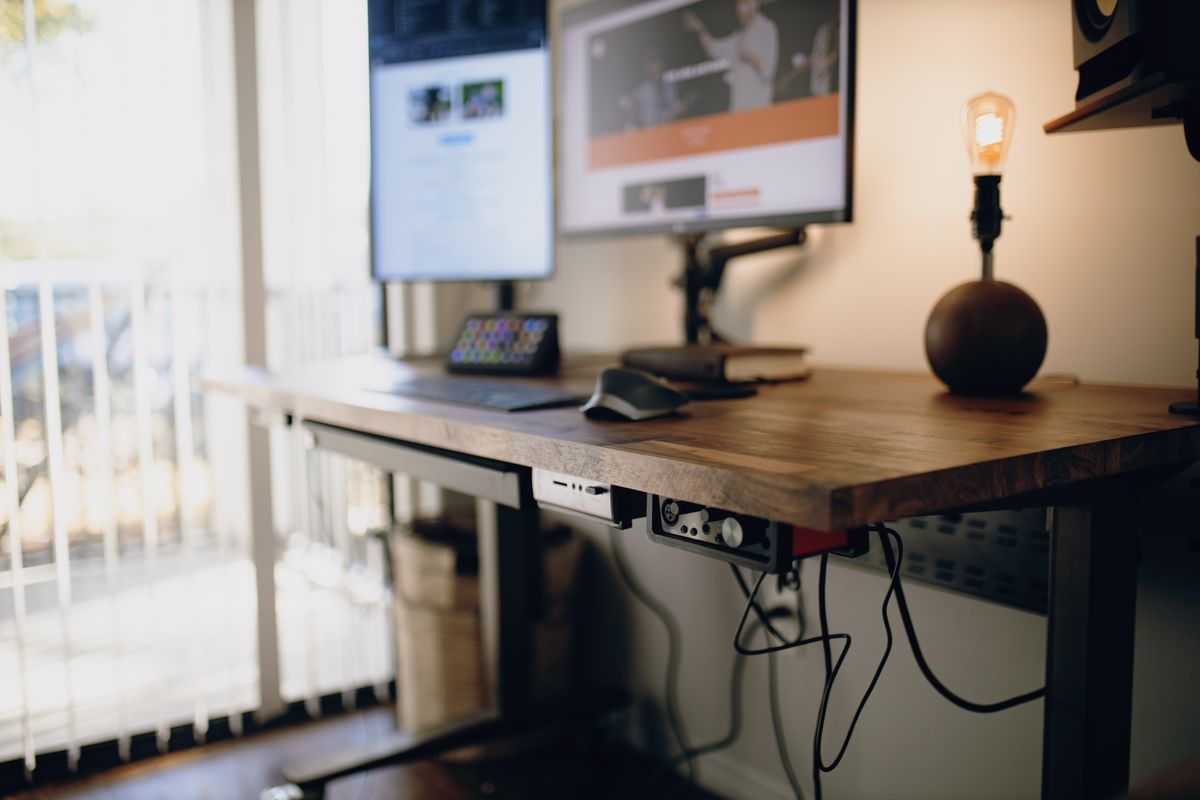
A desk with drawers promises two useful things in one piece of furniture. The tradeoff is often hidden beneath the top. A pedestal, center drawer or support rail may occupy the space needed for knees, thighs or ordinary chair movement, even when the desk looks generous from above.
Ask for the clear opening dimensions, not just the total width. Measure between the inside faces of the supports and from the floor to the lowest obstruction. A shallow center drawer can reduce underside height enough to matter, while a deep drawer unit on one side may force the chair away from the center of the screen.
Try the sitting position with the storage in place
Sit at a comparable desk if possible. Pull the chair close enough to work, move your feet and shift position. Check whether your thighs contact the underside or your knees meet a drawer corner. Include any footrest that you normally use. A desk that works with an empty floor may not work once that support is added.
Armrests can also determine how close the chair comes. If they strike the drawer front, lowering them may help only when that position still suits the user and the chair's intended adjustment. Removing a structural part of the desk or altering a chair to force the fit is not a sensible purchasing plan.
Open the drawers while seated. Can you reach the contents without trapping a leg or pushing the chair into a wall? Consider whether the drawer handles project into the opening. A rounded photograph does not always show the shape of the edges you will meet in daily use.
Compare storage beside the desk
A separate cabinet can be a better choice when integrated drawers compromise the sitting area. It allows storage to move as the work changes, although it needs its own footprint and safe placement. A rolling pedestal should not be parked where it blocks feet, chair wheels or an access route.
Think about what will actually go in the drawers. A small amount of stationery may fit in a nearby shallow organizer, leaving the full desk opening available. Files and heavy supplies may justify a larger cabinet elsewhere. Buying storage capacity that remains mostly empty is poor compensation for restricted leg space.
Before ordering, compare the clear dimensions with a setup that already fits you reasonably well. The drawer count is an easy feature to compare, but the open space between those drawers is what you will use all day.