The spare chair in a home office often arrives after everything else has found its place. It gets pushed into the remaining corner, then moved into the doorway whenever someone visits. Planning its normal and occupied positions at the same time can prevent that small but persistent inconvenience.
Think about why someone sits there. A brief conversation across the desk needs a different arrangement from reviewing a document side by side. For the latter, both people need a reasonable view of the screen or paper without the visitor balancing at the edge of a seat. A chair that works as a place to put a bag may not work for an hour of shared work.
Check the dimensions that affect the room: total width, depth, arm height and the space needed to sit down and stand up. Leave doors, drawers and the walking route usable when the chair is occupied. A lightweight chair may be easier to reposition, but it still needs adequate stability and a suitable load rating for its intended users.
Match the chair to the kind of visit
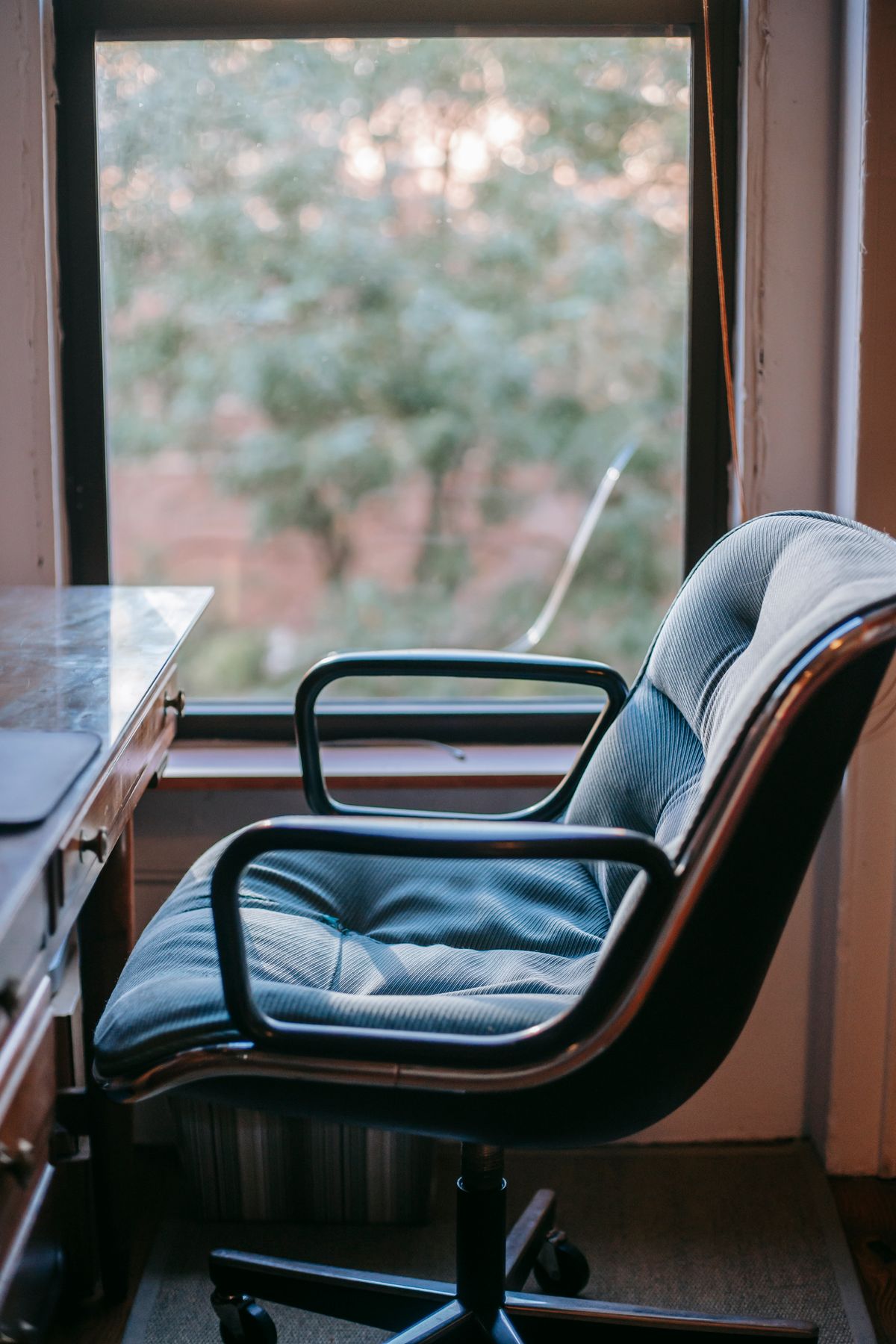
An upholstered seat can be comfortable for conversation but may take up more room and require different cleaning than a hard chair. A chair with arms can provide useful support for some people, yet its arms may prevent it from fitting under the available surface. If visitors have particular mobility or access needs, consider those needs directly rather than choosing only by appearance.
A folding chair is an option for infrequent visits when storage is limited. Use it according to its instructions, with its locking mechanism properly engaged, and give it a storage place where it cannot fall or obstruct access. Do not leave a partly folded chair standing behind a door and expect the next person to understand its condition.
For a chair that remains in the office, decide where it belongs between visits. Avoid making it the default pile for incoming parcels and paperwork. A seat that must be cleared for every conversation is not truly ready for use.
If the visitor begins using the space for regular work, reassess the arrangement. An occasional seat chosen around a short meeting is not necessarily suitable for a repeated working day at the desk. That change in use may call for a different chair, a different surface or simply another location with enough space for two people.