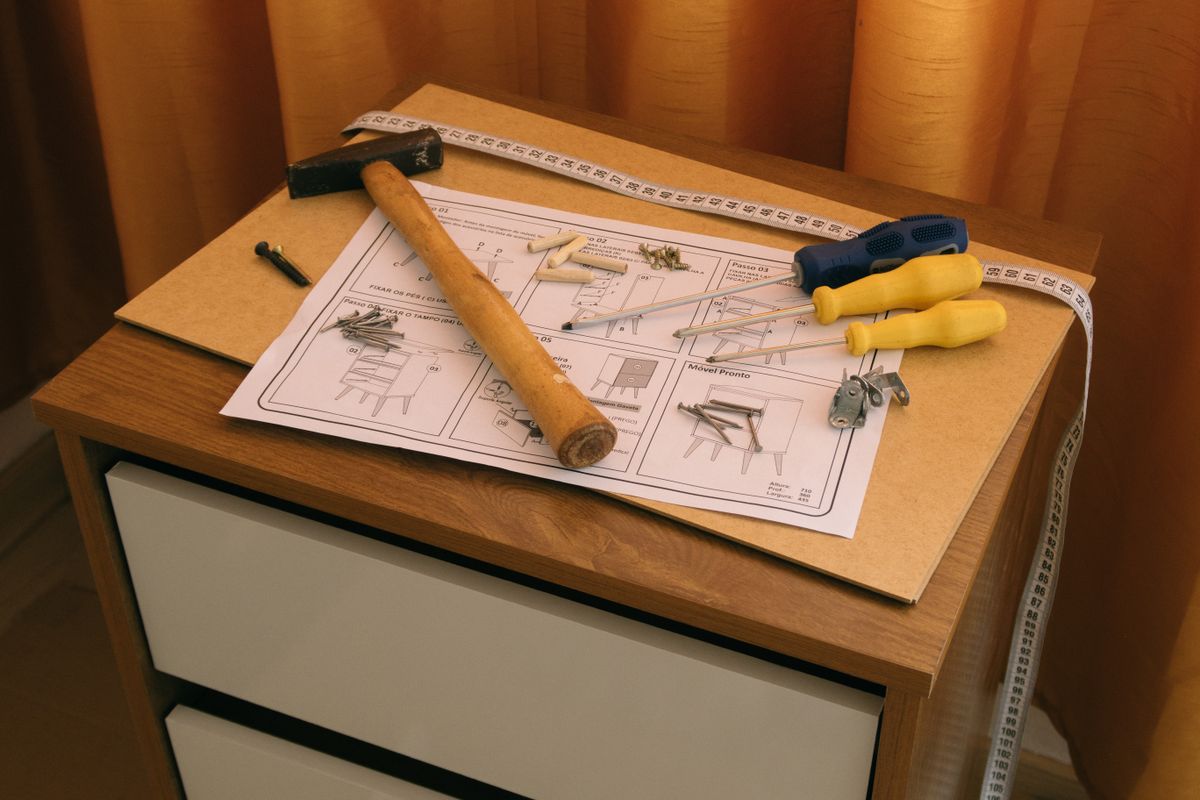
Furniture delivered in a flat box is not automatically designed to be dismantled and rebuilt many times. The joints, panel material and fittings determine how well it tolerates a move. If relocation is likely, look beyond the assembled dimensions and find out how the product is meant to come apart.
A useful manual shows the structure clearly and identifies the hardware. Check whether disassembly is covered, whether replacement fittings are available and whether any joints are permanently glued. A top that appears separate in a photograph may be fixed in a way that is not intended for repeated removal.
Favor understandable connections
Bolts, screws, dowels and cam fittings each have a purpose in a particular design. Do not assume that the most visible metal hardware makes the whole piece durable. The material receiving the fitting matters, and overtightening can damage some panels or inserts. Use the specified tools and tightening method.
Furniture with a modest number of accessible joints may be easier to handle than a complex unit with hidden connectors. Removable shelves and drawers can reduce carrying weight, but follow the manufacturer's removal sequence. Some drawer slides have release mechanisms that should not be forced.
Keep the manual and hardware identification with the furniture's records. When dismantling, label bags by assembly stage and keep them attached securely to a protected component or in a dedicated moving box. Loose screws mixed with unrelated furniture parts create unnecessary guesswork.
Measure the pieces that remain
Even after removing legs, a desktop may be too large for a vehicle or stair turn. Check the largest nonseparable part and any especially heavy component. Plan appropriate assistance and handling equipment rather than assuming disassembly makes every piece easy to lift.
Protect exposed edges, corners and fittings during transport. A projecting bolt can damage another panel, and an unprotected veneer edge can chip. Keep parts dry and supported according to their material and construction.
At the new location, inspect the pieces before reassembly. Cracked panels, stripped holes or bent fittings need suitable repair or replacement. Do not compensate for a damaged joint by adding random screws or adhesive. Reassemble and anchor the furniture as its instructions require for the new space.
If repeated moves are central to the plan, ask the manufacturer directly about that use. A clear answer about disassembly and spare parts is more valuable than a general claim that the furniture is easy to assemble.