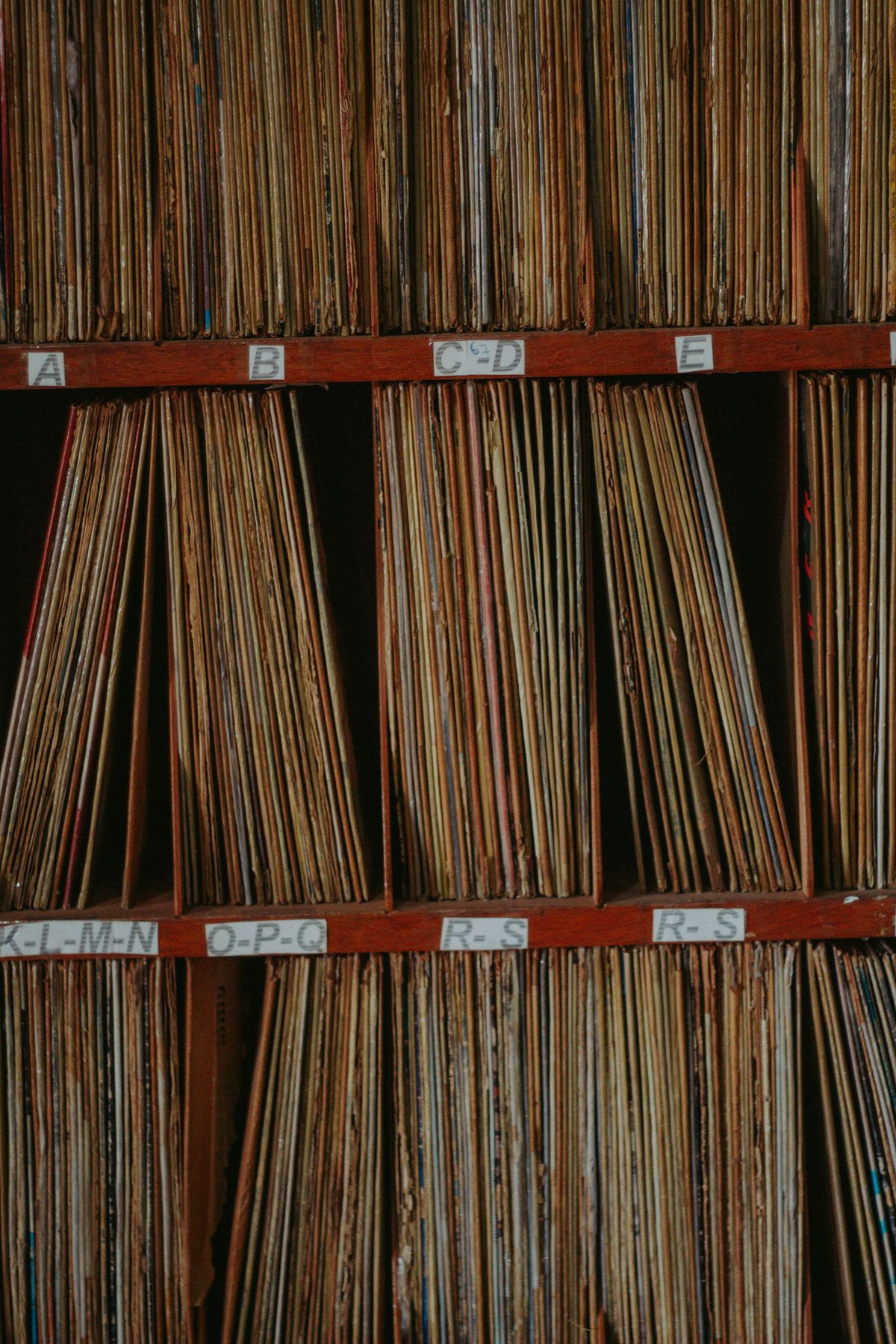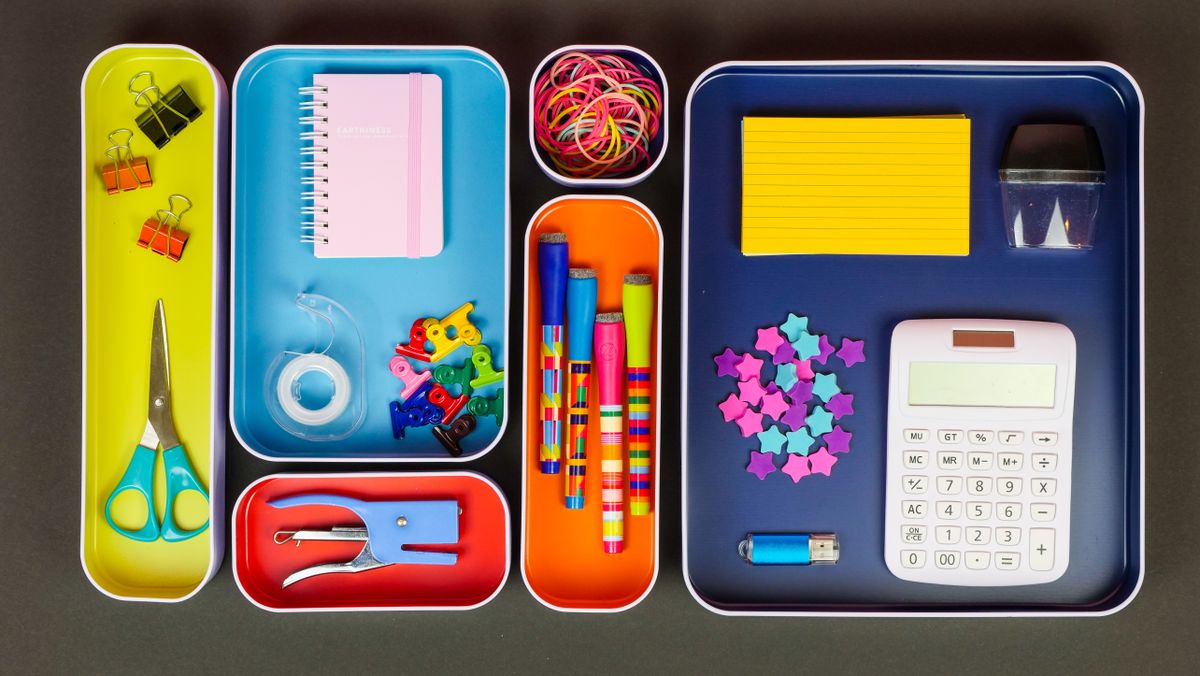
A stationery cupboard does not become organized simply because every item is inside a matching container. If the pens are hidden behind paper, the spare labels lose their product code and nobody knows which scissors are shared, the cupboard still creates small interruptions throughout the day. Arrange it around the things people actually do.
Begin with a short review of use. Put frequently requested supplies together on an accessible shelf: everyday writing tools, clips, a stapler and the paper normally used by the office. Keep specialist items nearby only if they are used often. Infrequent supplies can occupy another shelf without making the daily selection harder to scan.
Do not empty every package into a decorative bin. Labels need their template and printer information; staples need their size; refills need their compatible pen or tool. Keep packaging or transfer the important specifications to a clear label. A tidy container full of unidentified parts is harder to use than an ordinary labeled box.
Separate working tools from reserve stock
A shared stapler is a tool people should return. A packet of staples is a consumable that will be used up. Give them related but distinct places so that someone can find the refill without searching a pile of spare equipment. Store unopened reserve stock behind or below the working supply, where it is visible enough to count but not mixed with loose items.
For small items, shallow containers often work better than deep ones. You can see what is present without digging, and different sizes are less likely to become mixed. Use dividers only where they keep genuinely different items apart. A dozen tiny compartments can be more effort than a few clearly named groups.
Keep heavy paper packs low and sharp tools appropriately stored. If the cupboard is in a home or shared space accessible to children, consider access and locking according to the contents. Avoid balancing supplies on high shelves or filling the door with loose items that fall when it opens. Follow the furniture's load and stability guidance.
Make shortages visible without counting everything
Choose a simple signal for the items that regularly run out. It might be a reorder card behind the last unopened pack, a shared note beside the cupboard or a line on the inside of the door. Identify who normally places the order so that a shortage does not produce either three purchases or none.
Write specifications on that list while the empty packaging is still available. 'Black pens' may be enough if the office has no preference, but it is not enough for a tested refill or a particular label sheet. Include pack size so that someone ordering remotely can distinguish one item from a box of twelve.
Leave a small place for supplies that need a decision: a refill nobody recognizes, a tool that appears damaged or an unopened item for retired equipment. Review that space promptly. It should not become a permanent collection of objects that people are afraid to throw away but cannot use.
After the cupboard has been used for a week or two, notice what repeatedly ends up in the wrong place. The label may be unclear, the container may be awkward to reach or the item may belong with a different task. Change the arrangement to fit actual behavior instead of treating every misplaced object as a failure to follow instructions.
The finished cupboard does not need to impress a visitor. It needs to let someone take a working pen, find the correct refill, return the shared tool and leave a clear signal when stock is low. Those small actions are a better measure of success than how uniform the shelves look with the doors open.