A parcel seam opens because the tape fails, the box fails or the closure was never secure enough in the first place. Adding a second strip over a dusty, lifting first strip may conceal the problem without fixing it. Before choosing tape, check that the box is in good condition and appropriately sized for the contents.
The flaps should meet naturally. If they have to be pulled together against a bulging load, use a different box. If a large empty space allows the contents to move, add suitable internal support or choose a closer-fitting package. The adhesive is meant to hold a correctly assembled closure, not keep an overloaded carton from springing apart.
Use tape sold for parcel packing and suitable for the carton and conditions. Thin stationery tape and masking tape serve different jobs. USPS recommends strong packing tape at least two inches wide for its domestic package preparation. Other carriers and specialist packaging may have their own instructions, so use the guidance for the service you intend to buy.
A roll's length and width are only part of the comparison. Consider whether it is suitable for the cardboard surface, whether it is pressure-sensitive or water-activated, and whether you have the equipment needed to apply it properly. A heavier-looking roll is not automatically the better match. Keep the manufacturer's storage and application directions with any unfamiliar product.
Seal the box while you can still inspect it
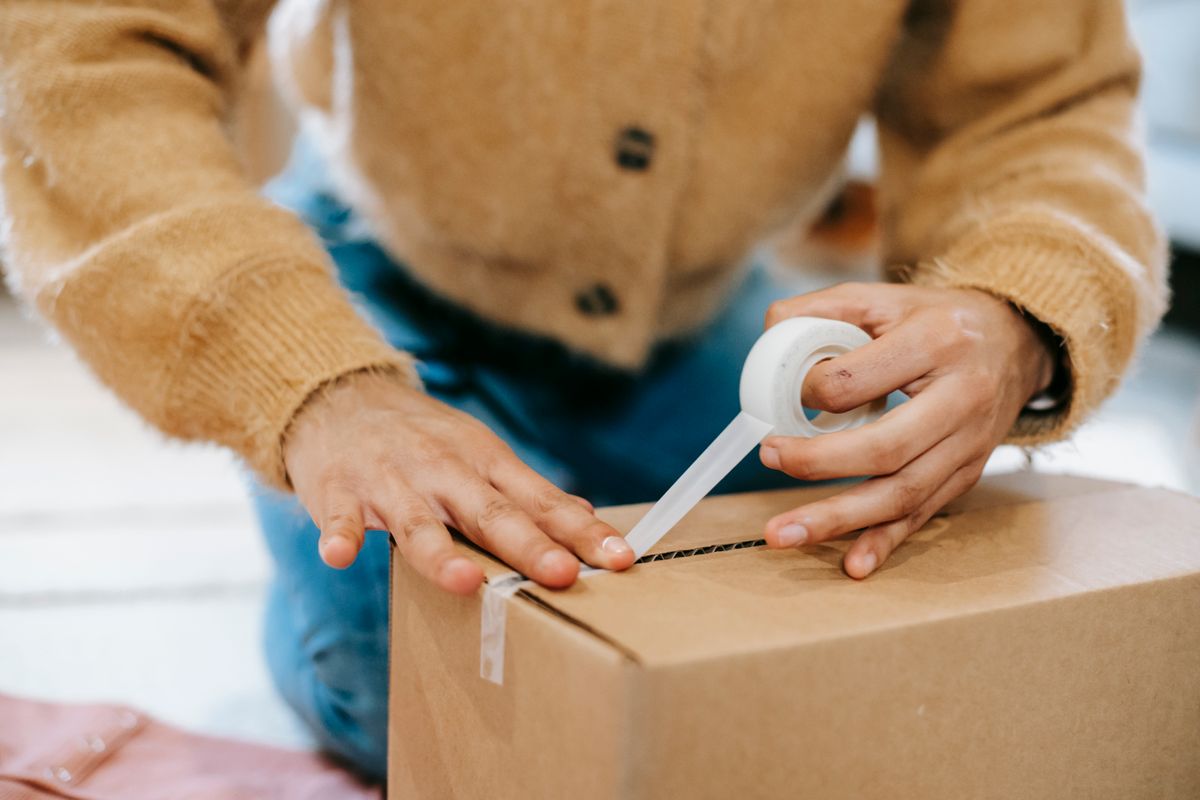
Apply tape to a clean, dry surface and smooth it into contact without stretching it excessively. Cover the required seams according to the carrier and packaging instructions, including the bottom of a newly assembled box. Check that the ends adhere firmly rather than curling back immediately.
Inspect a reused box for old tape that is loose or contaminated. Taping over an unreliable layer can leave the new closure attached to the old layer rather than to sound cardboard. If removing the old tape tears away substantial surface material, the box may no longer be worth reusing for that shipment.
A tape dispenser helps with repeated jobs, but only if it accepts the roll's width and core and gives controllable tension. Keep its cutting edge away from hands and the item being packed. For occasional use, a simpler dispenser can be adequate; there is no need to buy a large handheld unit merely because it looks like warehouse equipment.
Before attaching the shipping label, lift and gently move the sealed package enough to check that it stays closed and that the contents are not sliding freely. This is an inspection, not a substitute for the protection required by fragile goods. Make sure the label lies on an appropriate flat surface and does not bridge an opening seam.
Store the remaining tape where it will stay clean and within its stated conditions. If several people pack parcels, leave a short note identifying the approved tape and box sizes. Consistency reduces the temptation to use whatever sticky material happens to be closest to the door.