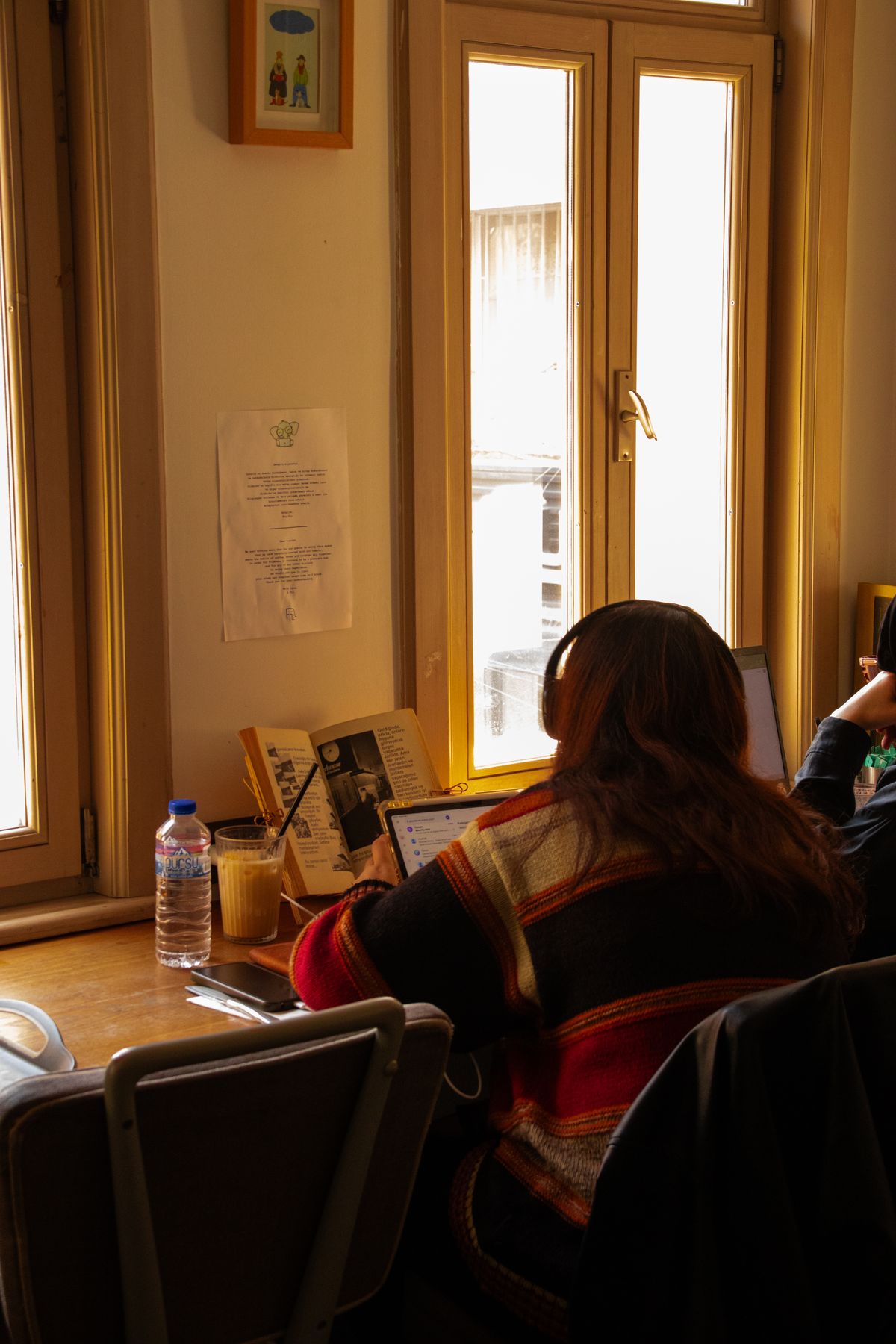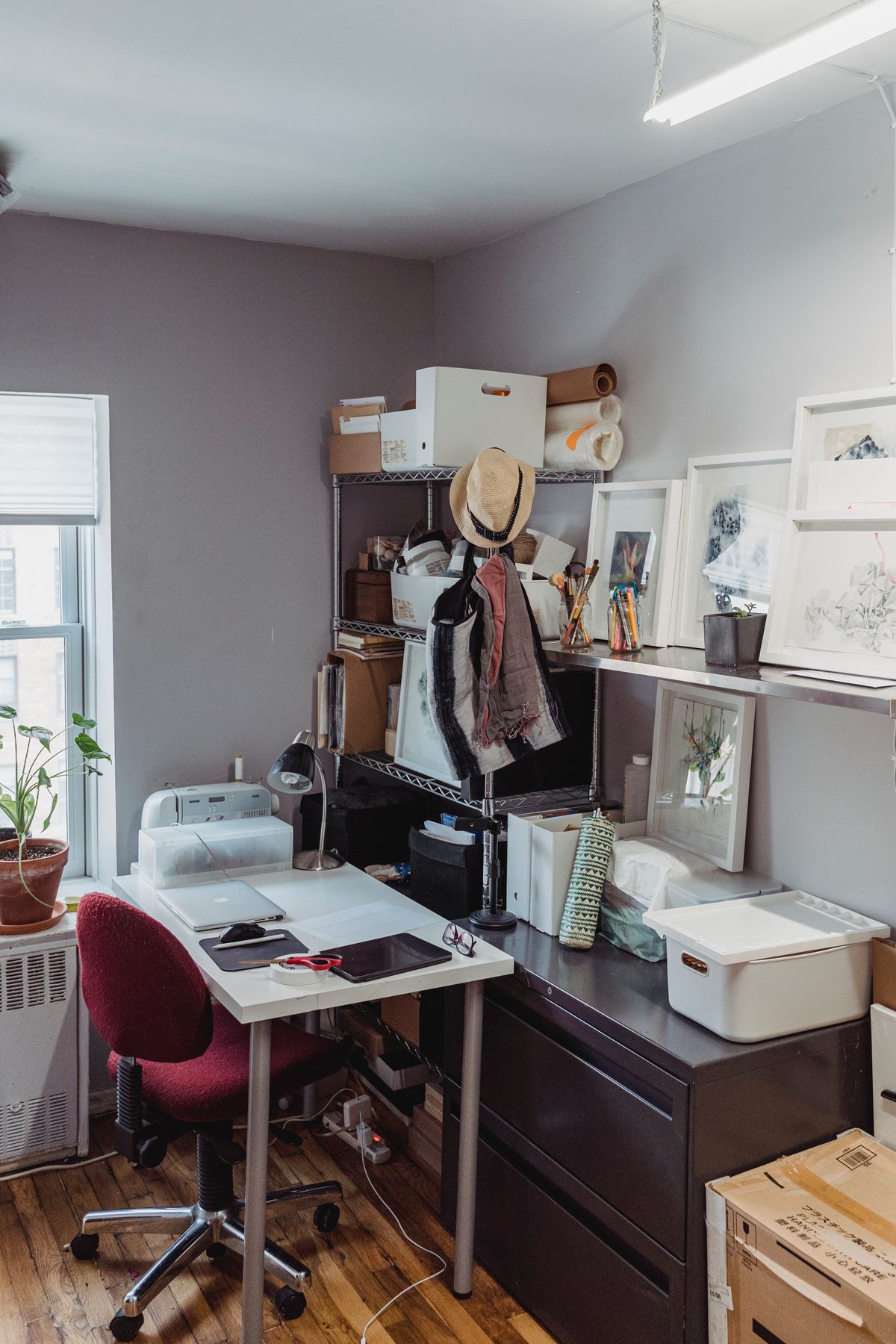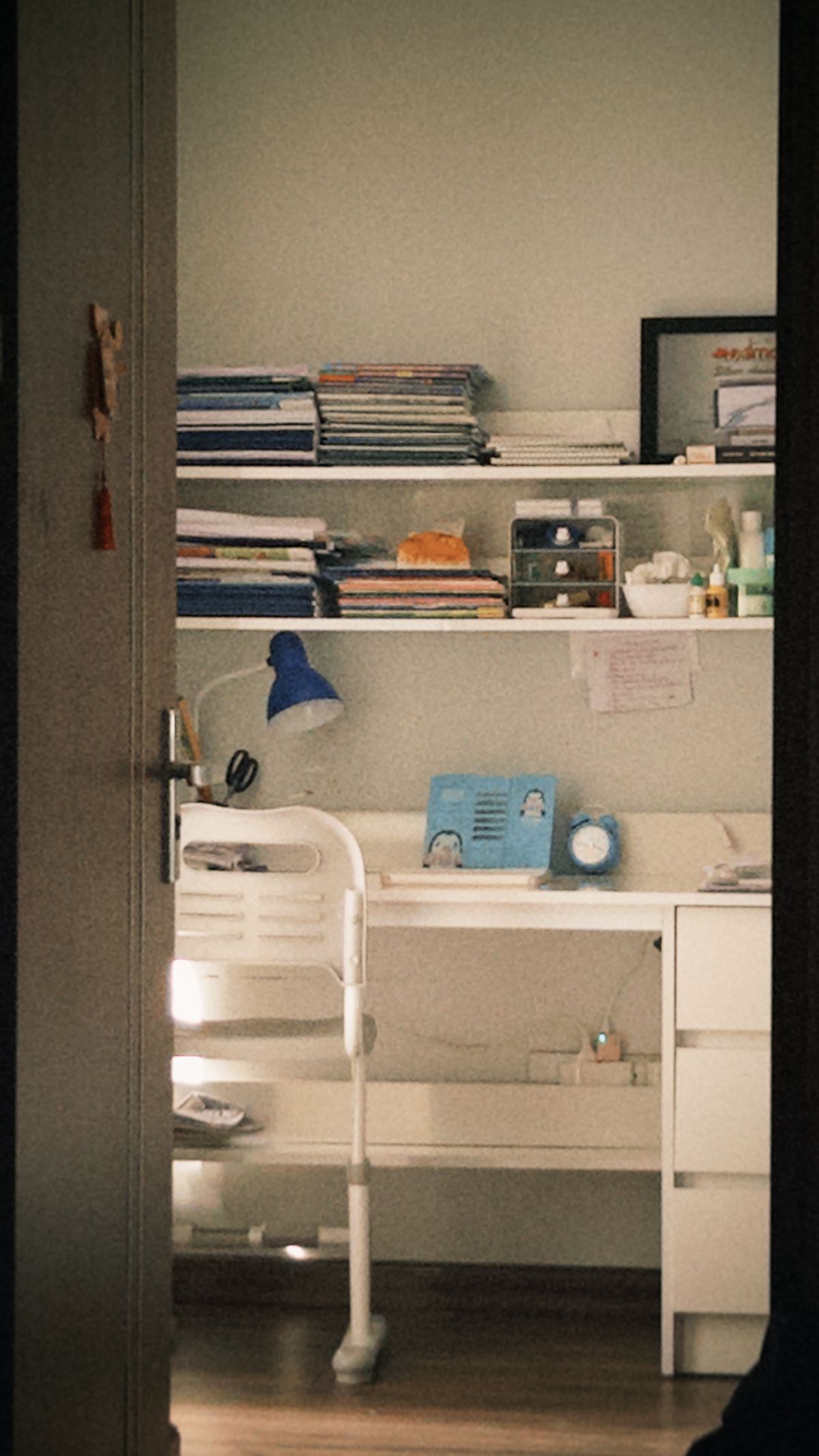
A home office can contain many objects that look like toys to a young child: colorful clips, magnetic accessories, a rolling chair and a machine that makes paper disappear. Moving a pen cup to a higher shelf addresses only a small part of the room. Review storage from the child's level and think about what could be reached by climbing.
Small loose items such as staples, pins, clips and spare batteries need secure storage appropriate to their hazards. Keep button batteries and products containing them secured according to their instructions, and do not leave loose cells in an open stationery tray. Sharp tools, adhesives and cleaning products should remain in their original or suitable labeled containers and away from children.
Height alone is not security
A drawer or cabinet with an appropriate child-resistant lock can be more useful than an open shelf above the desk. Maintain the device and check that it actually engages when the door closes. No latch replaces supervision, and a system that adults routinely leave open will not provide the intended barrier.
Avoid putting attractive objects on top of tall furniture. CPSC's Anchor It guidance emphasizes following the manufacturer's instructions for securing furniture and removing items that tempt children to climb. Heavy contents placed low can help the arrangement, but they do not replace required anti-tip restraints. A rolling chair parked beside shelves may provide an unintended climbing aid.
Treat office machines separately
Keep a paper shredder in an area children cannot access, unplug it when not in use and never allow children to operate it, including under adult supervision. CPSC's shredder guidance is explicit on this point. An automatic start sensor or a modern safety feature should not be treated as permission for a child to feed paper into the opening.
Laminators, cutters and other equipment have their own heat, blade and pinch hazards. Store and operate them according to their instructions, with children kept away from the working area. Let equipment cool before putting it away where its manufacturer requires this.
Route cords so that they do not hang where a child can pull equipment off a surface. Keep blind cords and loose loops out of reach, and do not use a power cord to restrain furniture. Maintain clear exits and avoid placing heavy equipment on unstable supports.
Review the room again when a child begins crawling, climbing or opening drawers. Access changes faster than the storage arrangement. A brief check after a delivery, repair or furniture move is also worthwhile because those events often leave tools, packaging and spare parts where they were not before.