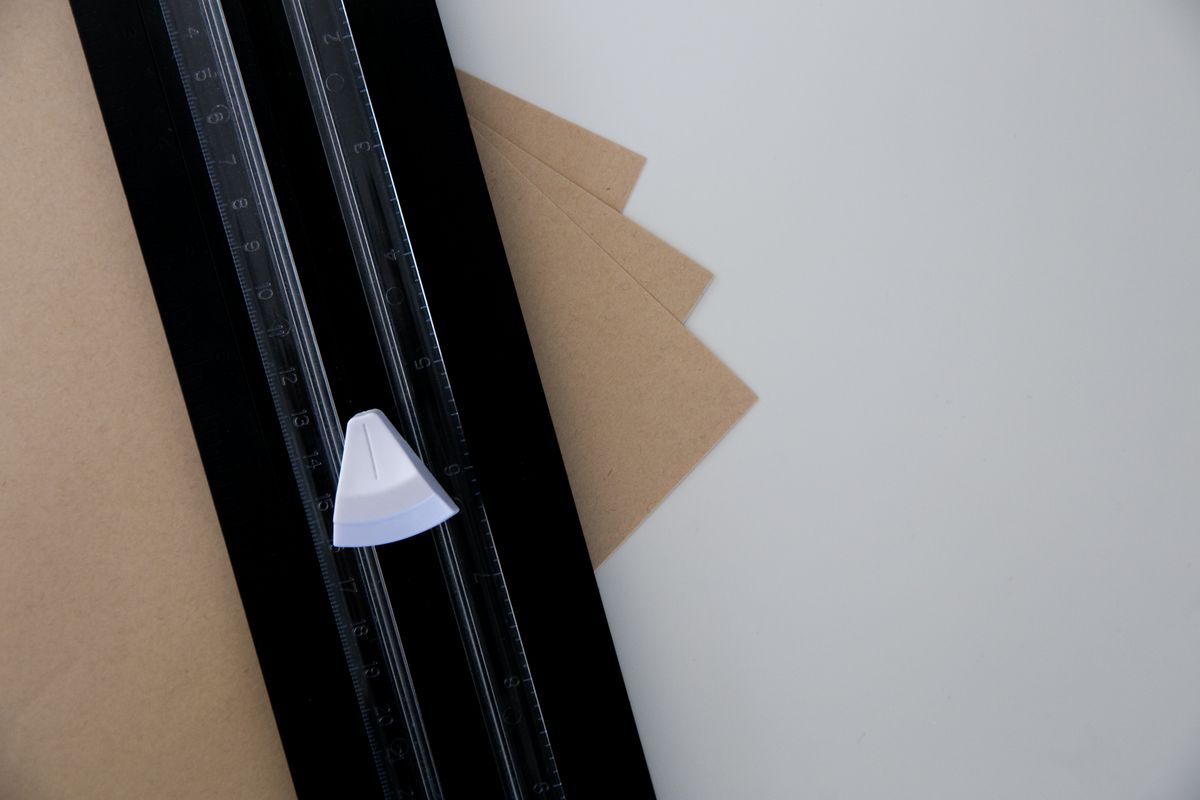
A cutter bought for trimming a photograph may struggle with a stack of report covers. A larger machine can still be unsuitable if its clamp or markings make small work awkward. Start with the material you cut, the length of the longest cut and whether you normally trim one sheet or several at once.
Capacity ratings depend on the stated paper type. Thick card, laminated sheets and layered materials should be checked against the permitted stock rather than converted casually into a number of ordinary sheets. If a cutter is not approved for a material, extra pressure is not a substitute for compatibility.
Understand how the material is held
A rotary trimmer moves a cutting head along a rail. A guillotine-style cutter brings a blade down through the material. Within both groups, the guard, clamp and alignment system vary. Examine whether the paper can be held square without placing fingers near the cutting path. A well-marked bed is useful only if the sheets stay where you align them.
Check the usable cutting length rather than the overall size of the base. Allow room for the uncut portion of a large sheet to lie flat. On a cramped table, unsupported paper can twist or slide while you line up the edge. A lightweight cutter may also move if the working surface is unstable or unsuitable.
A safe mechanism needs safe storage
Look for the manufacturer's guard and storage-lock arrangement and make sure you can operate it comfortably. Keep protective parts in place. A machine with a missing, broken or inconvenient guard is not improved by working around it. Store the cutter where children cannot reach it and where another person will not grab an exposed cutting edge while moving nearby supplies.
If a cut becomes ragged, stop and inspect the user-serviceable parts described in the manual. Some trimmers use a replaceable blade cartridge and cutting strip; their replacement method is specific to the model. Do not sharpen, dismantle or adjust a blade assembly unless the manufacturer explicitly provides that owner procedure.
Before trimming a finished document, make a trial cut on spare material of the same type. Check squareness, edge quality and how securely the stock is held. Leave final measurements on the waste side where possible so pencil marks do not remain on the useful piece. The right cutter makes a repeatable cut without requiring a stronger grip, a clever workaround or a hand near the blade.