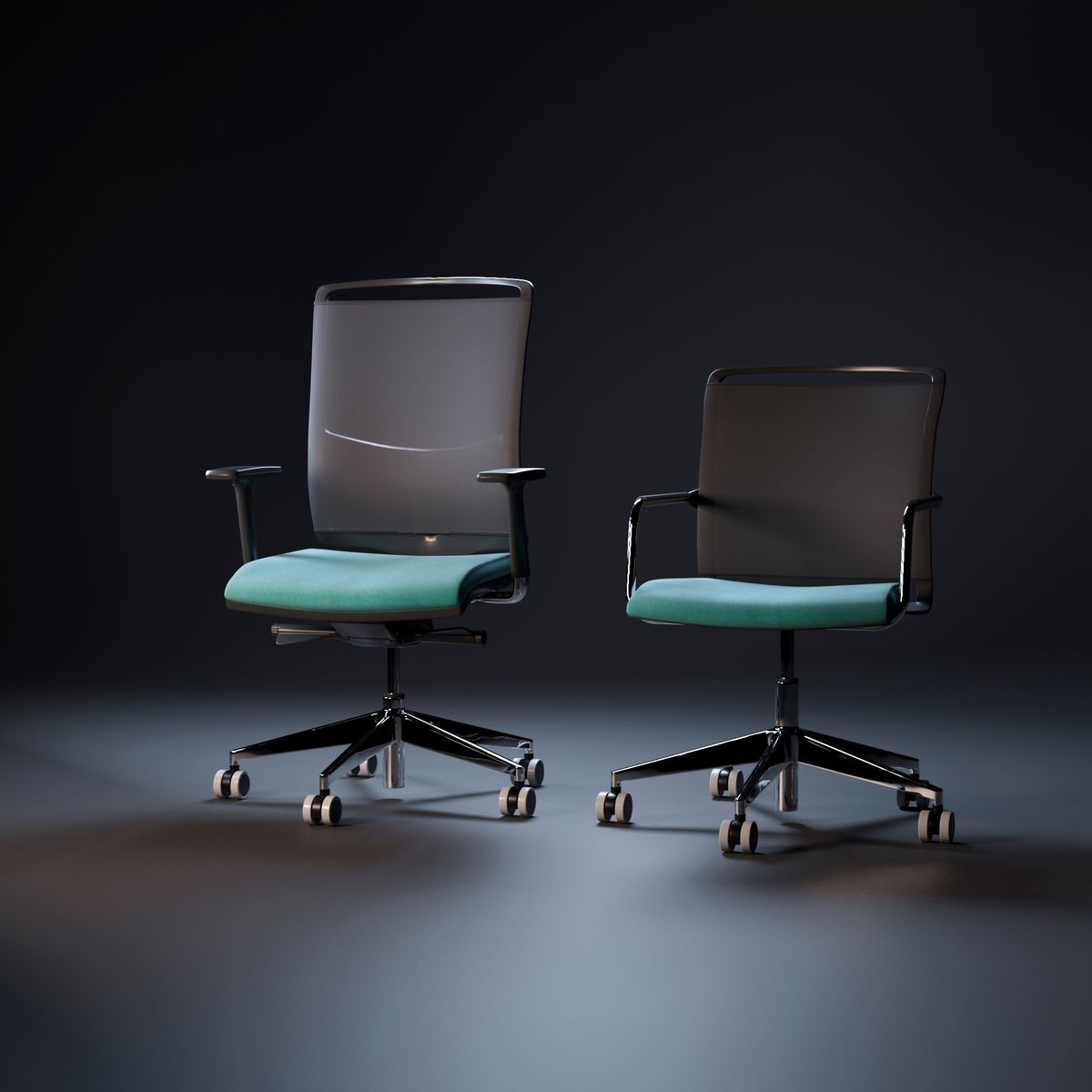
The height lever is the most obvious chair control, so it is tempting to treat it as the main measure of adjustability. Yet two chairs set to the same height can feel very different. Their seats may differ in depth, the backrest may contact a different part of the body, and the armrests may prevent one chair from approaching the desk.
A useful chair trial begins with the desk height and the person who will use it. Adjust the seat so that the working surface can be reached without lifting the shoulders, while maintaining suitable foot support. If those needs cannot be met together, the problem may involve both chair and desk rather than the chair alone.
The seat must fit from front to back
Sit against the backrest and check whether the seat supports you without pressing into the backs of your knees. A deep seat can prevent a shorter user from reaching the back support, while a very short seat may provide too little support for another person. An adjustable seat depth can help, but only if its range covers the required position.
Seat width matters as well. There should be room to sit and move without being compressed between armrests or side structures. Check the manufacturer's user limits and intended use. A weight rating is a capacity limit, not a complete description of fit or comfort.
Try the backrest adjustments while seated. Controls should be reachable and understandable, and the back should provide support in the positions you actually use. Recline tension and locking arrangements vary by model. Ask for a demonstration rather than assuming that a knob performs the same function as the one on another chair.
Test the armrests against the desk
Armrests should not lift the shoulders or hold the elbows unnecessarily far from the body. They should also allow the chair to approach the work surface. Height adjustment may not be enough when the pads are too widely spaced or too long. Width, depth or pivot adjustments can matter, depending on the user.
Not everyone uses armrests in the same way. The important test is whether they support the intended activity without interfering with typing, reaching or getting out of the chair. A chair advertised with many controls may still have a range that does not suit the person.
Look beyond the short showroom sit
Check the base, casters and floor compatibility. The chair should remain stable, and the wheels should suit the surface according to the manufacturer's guidance. Confirm assembly requirements, replacement-part availability and the return policy before ordering a chair that cannot be tried.
A brief comfortable sit cannot guarantee comfort through every task. If a trial period is available, use ordinary work to evaluate the chair: typing, writing, reaching for a file and standing up. Change one adjustment at a time so that you can tell what helped.
No chair should be presented as a cure for pain or a reason to remain in one position indefinitely. Choose a model that fits, can be adjusted sensibly and supports changes of position during the day. Persistent discomfort deserves appropriate professional advice rather than a succession of unverified product promises.