Two identical notebooks and a stack of unlabeled folders are enough to make a shared cabinet confusing. The solution does not have to be a complex color scheme. Start by deciding what is shared, what belongs to each person and what should not be accessible to everyone using the room.
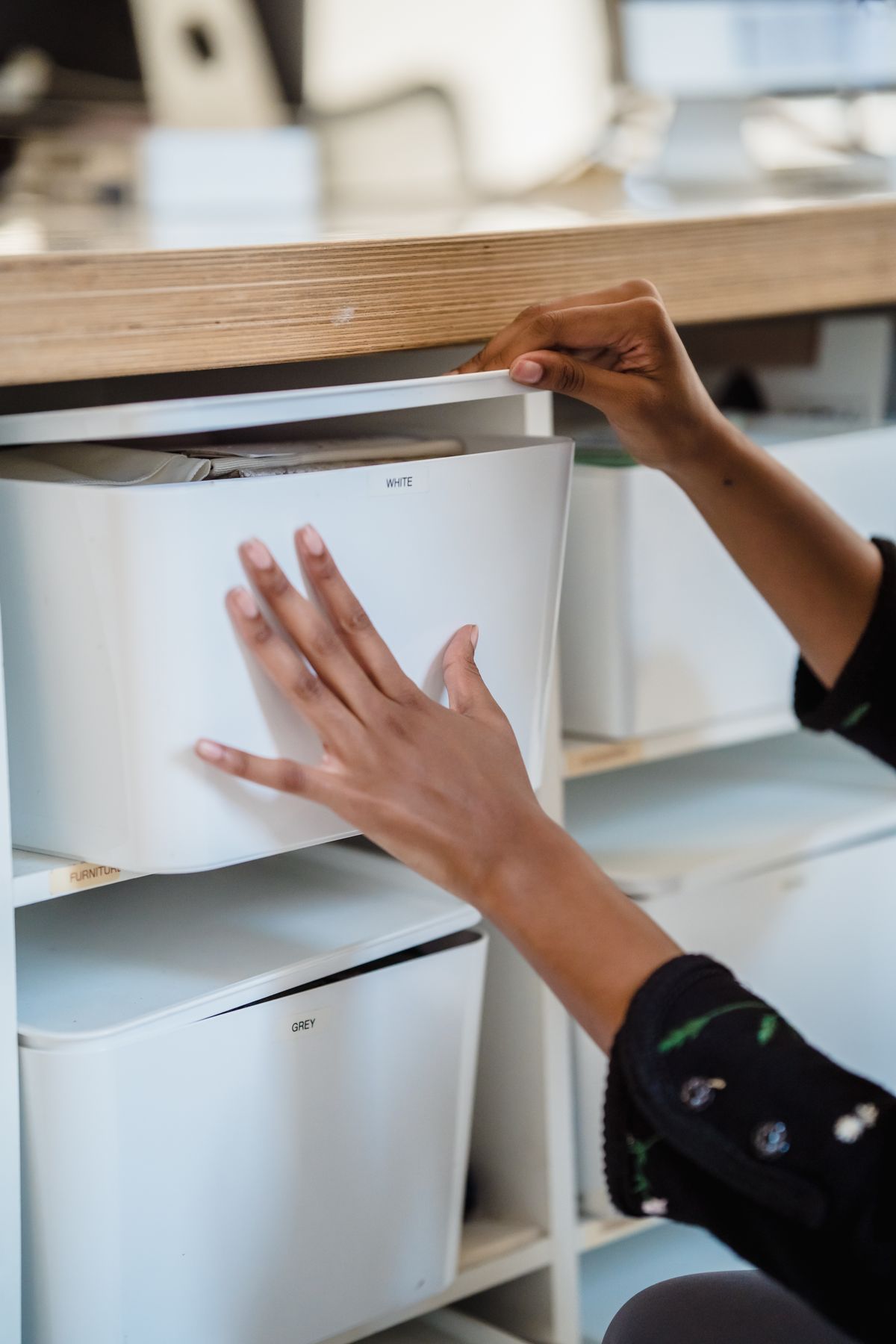
Give common supplies a separate, plainly labeled area. Paper, spare pens and mailing materials can live together if both people may use them. Personal work can go in named folders, trays or bins with enough space for the actual contents. A shelf divided into equal halves is convenient only when both users need roughly the same amount of storage.
Make the boundaries easy to maintain
Choose labels that describe ownership or purpose without exposing sensitive information. A container marked with a person's name can be clearer than a color nobody remembers. Confidential client names or project details may not belong on an outward-facing label in a room used by visitors.
Leave a small amount of flexible space for work that grows temporarily, but agree what that space is for. Without a rule, an empty shelf tends to become permanent storage for whichever person reaches it first. A simple arrangement might allow an active project box for a limited period, followed by a review when the project ends.
The contents should be retrievable without removing somebody else's materials. Deep bins can make the front neat while hiding inaccessible items behind them. Compare container depth with the cabinet and use the available shelf height without stacking more than is convenient and safe to handle.
Privacy is different from tidiness
An opaque box hides a document from casual view; it does not provide controlled access. Where work requires secure storage, use the arrangement approved for that information, including appropriate locks and access management. Do not treat a shared household cabinet as suitable for confidential records simply because its doors close.
Set a routine for common stock as well. One visible reorder note or agreed minimum quantity is easier to follow than two people independently buying replacements. Keep the routine light enough that it is used: a pen and a short list may be sufficient for a small cupboard.
Review the cabinet when its use changes. A new person, a longer project or a printer moved into the room can alter the space required. Adjust the boundaries openly rather than letting possessions creep into the neighboring section. The cabinet works when everyone can find and return their own things without having to negotiate each visit.