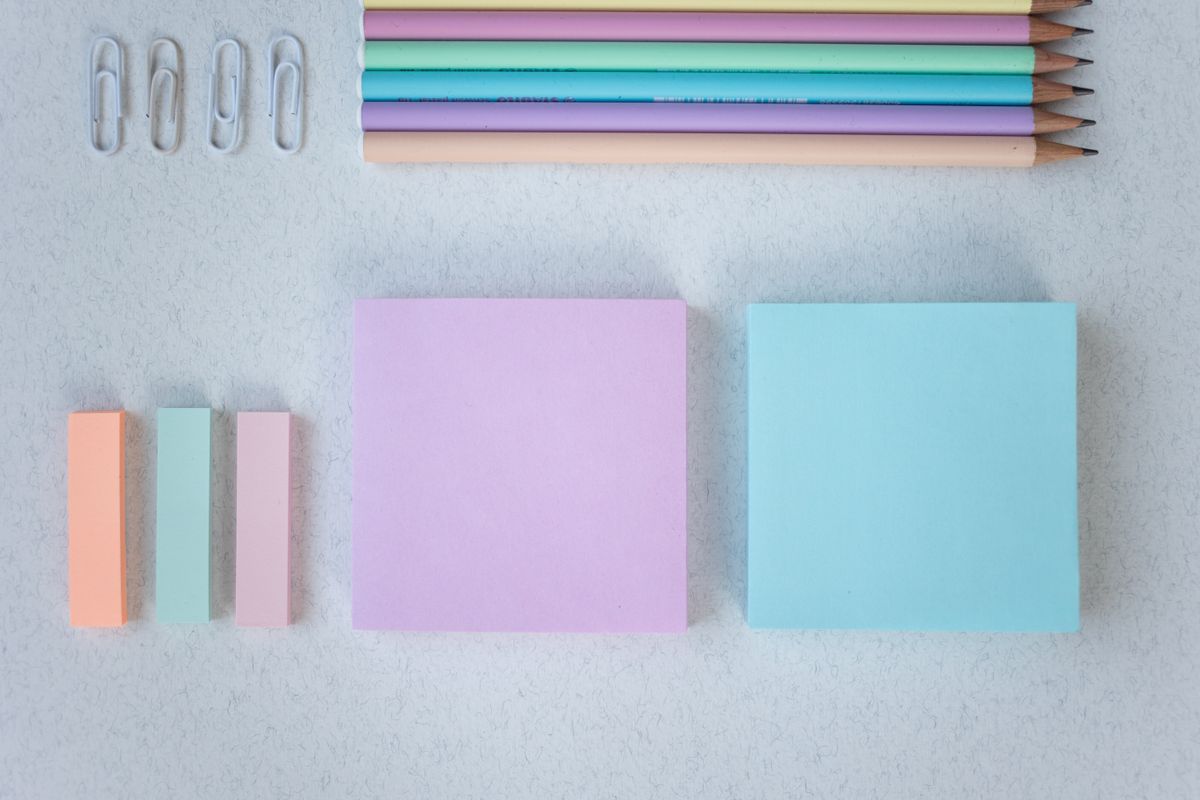
A removable note is temporary; the finish underneath it may not be forgiving. A freshly painted cabinet, a delicate book page and a computer display are poor places to experiment with adhesive simply because the note is small. Choose the location with as much care as the message.
Use a product intended for the surface and purpose. Removable, repositionable and permanent adhesive are not interchangeable descriptions, and even a removable product has conditions and limitations. If you need a temporary mark on an important original, a nonadhesive bookmark or a separate reference sheet may avoid the risk entirely.
For an ordinary desk or shelf, test in a discreet spot when the surface is unfamiliar. Follow the note maker's instructions and any guidance for the furniture finish. Do not treat a successful quick peel as proof that the adhesive will behave identically after weeks in heat or sunlight. If the surface changes or residue appears, stop using that combination.
Make the note useful while it is there
Put it where it can be seen without covering controls, ventilation openings or information someone needs. A reminder on a monitor bezel is a different proposition from a note across the screen itself, but even the bezel's material and finish should be considered. Keep notes away from moving parts and any place they could fall into equipment.
Write enough context that the message survives beyond the moment. 'Call supplier about missing shelf bracket' is more useful than a phone number with no name. Add a date or owner when a shared note could otherwise become ambiguous. If the message contains private information, use an appropriate system rather than a visible reminder in a shared room.
Give temporary notes an ending. Move an action into your task list, transfer a decision to the project record or discard the reminder when it is complete. A surface covered in old notes makes the current one harder to notice. Repeatedly adding fresh notes over older ones also increases the chance that the whole stack will detach.
Remove a note gently in the manner recommended for the product and surface. Avoid scraping with a blade or applying a strong cleaner to remove residue without checking compatibility. When the surface is valuable or delicate, seek appropriate advice instead of escalating the cleanup.
A small dedicated note board or paper pad can be the easiest solution for a frequently changing set of reminders. It provides a replaceable working surface and keeps adhesive off equipment and furniture. Temporary information belongs somewhere easy to update, not somewhere expensive to repair.