A notebook squeezed between a keyboard and a mug may technically fit, but writing in it can still involve an awkward wrist angle and a raised elbow. Leave room for the whole action: opening the pages, moving the hand across a line and resting part of the forearm. That area is larger than the closed notebook.
Try the actual document size you use most. A small meeting notebook, a legal pad and a printed spreadsheet each ask for a different arrangement. If notes are taken throughout the day, give the writing area a permanent place. If handwriting happens only during occasional calls, a surface that clears quickly may be enough.
Move low-priority objects first. A large pen organizer or decorative tray often occupies the exact spot a notebook needs. Keep a few writing tools in a smaller holder or drawer and test whether the existing desk has enough usable area before considering a wider one.
Let the two tasks take turns
When typing and writing are separate activities, a lightweight keyboard can slide back temporarily, provided there is a clear, stable place for it. Avoid stacking it on a laptop or putting it where a cable must be pulled tight. If you alternate every few seconds, keep both work areas accessible at once rather than repeatedly rearranging the desk.
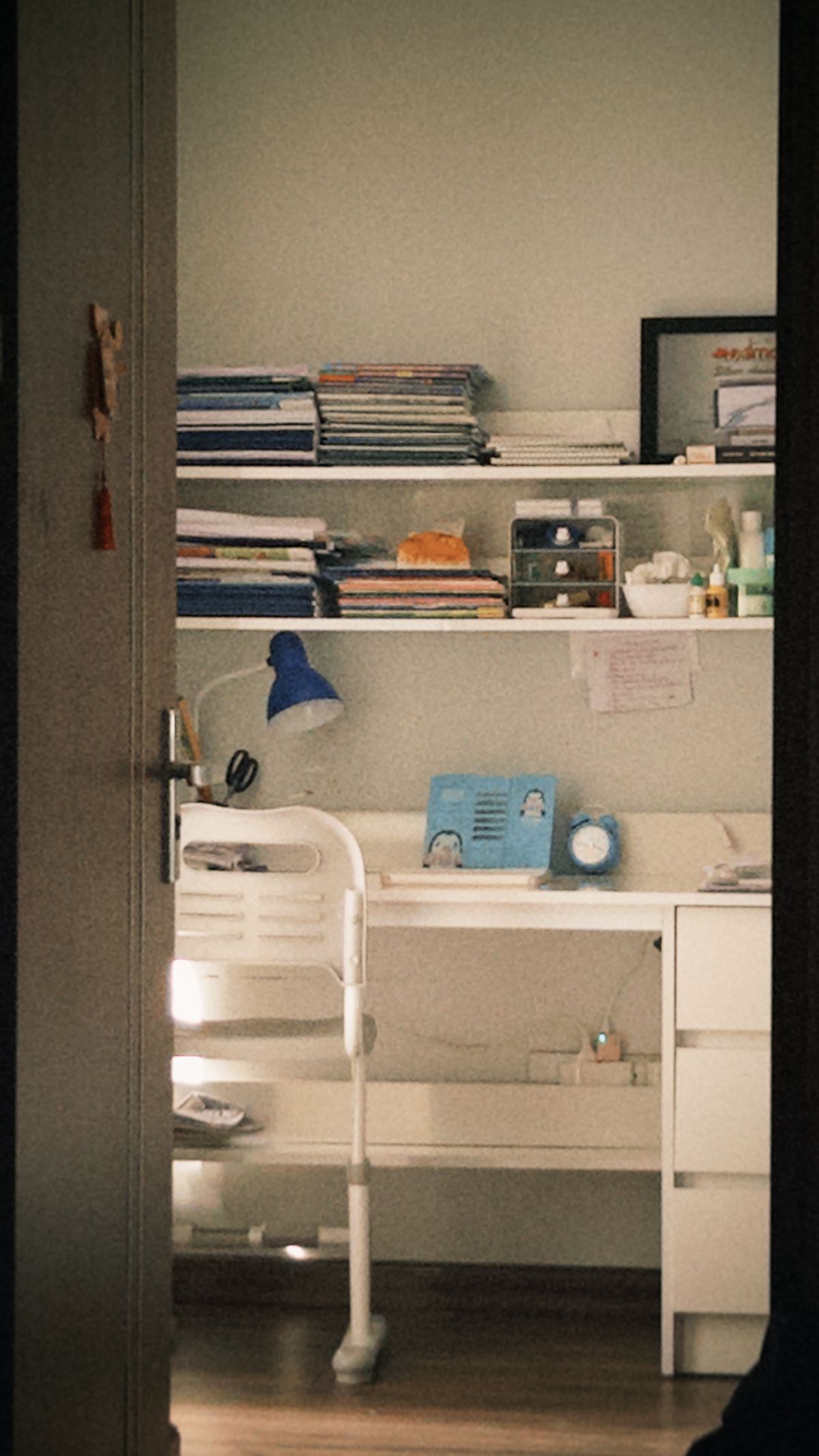
Place a task lamp so that the writing hand does not cast a heavy shadow across the page. Its base should not consume the newly cleared space. A suitable clamp lamp may help, but check the desktop material and the fixture's attachment instructions.
A desk pad can provide a consistent writing surface over a textured top. Confirm that its backing is compatible with the finish and that it lies flat. Very soft pads may be pleasant under a mouse but less suitable for firm pen pressure.
Finish by writing a real paragraph, not just setting a notebook in place. If your forearm keeps knocking the mouse or your hand reaches the desk edge before the line ends, the paper needs a little more room. The test is simple and more informative than a perfectly aligned desktop photograph.