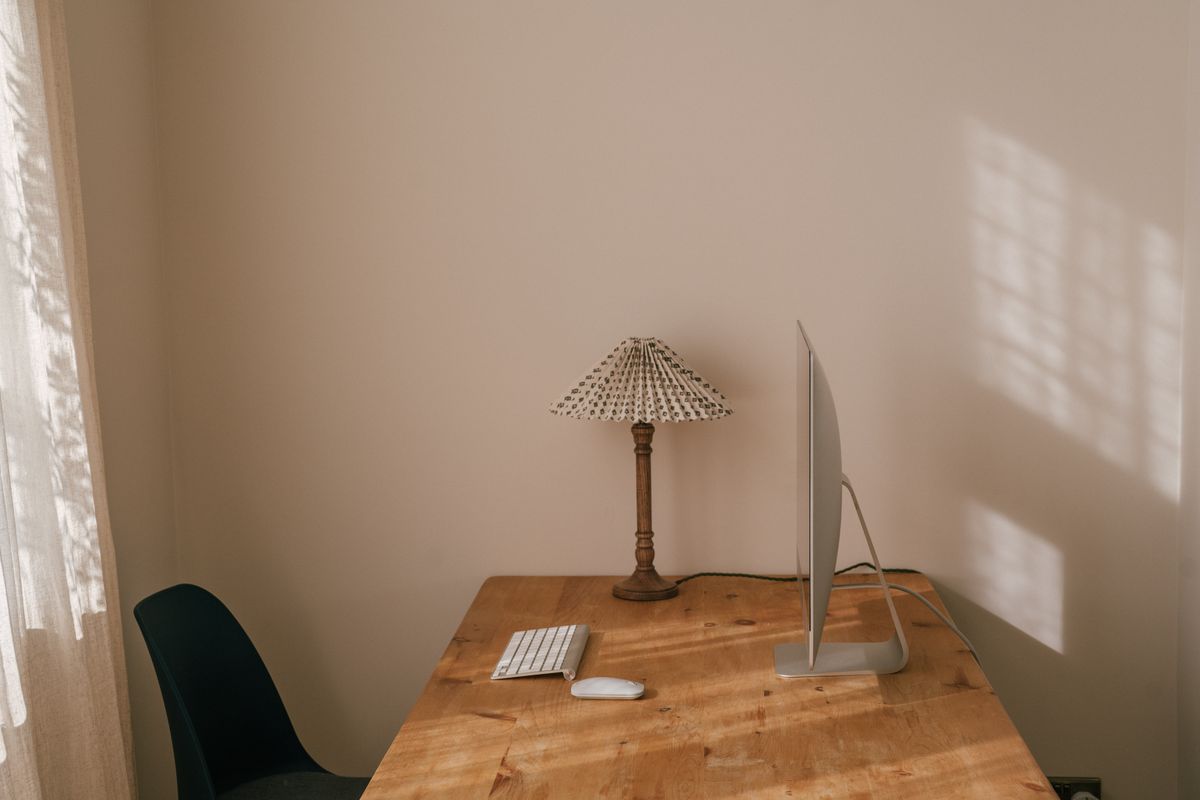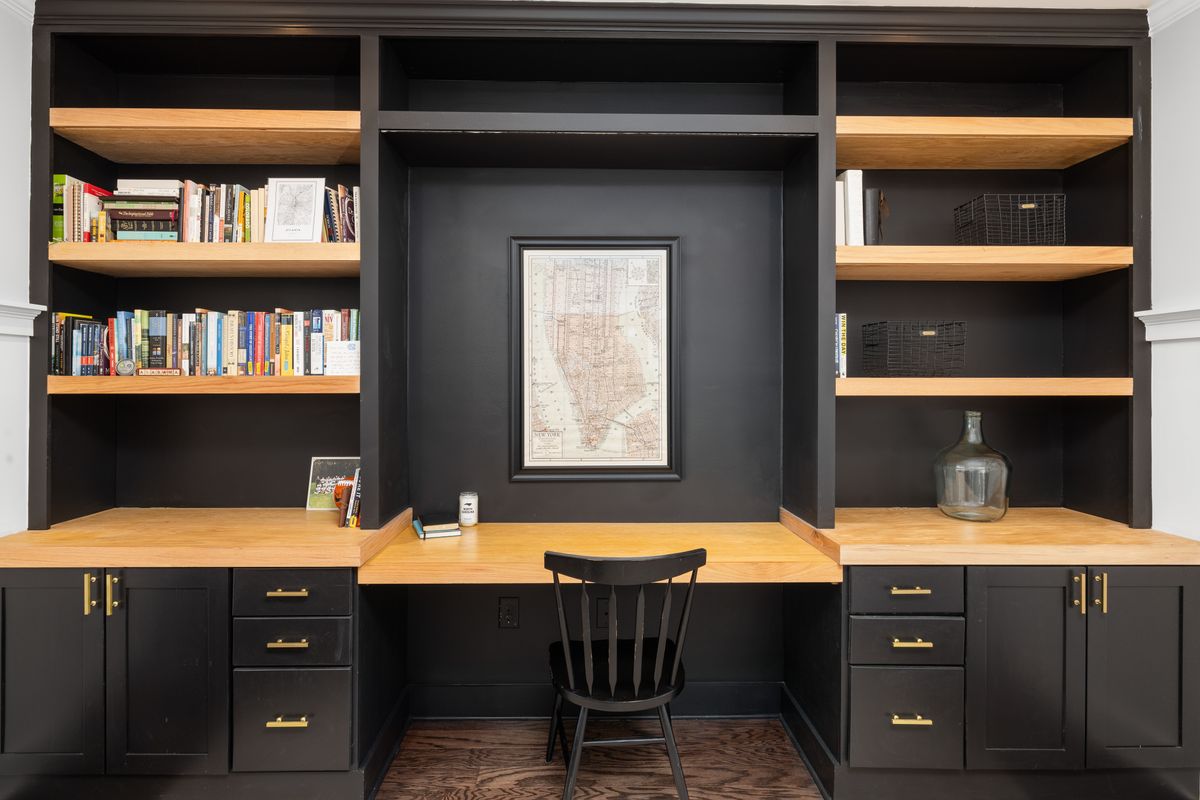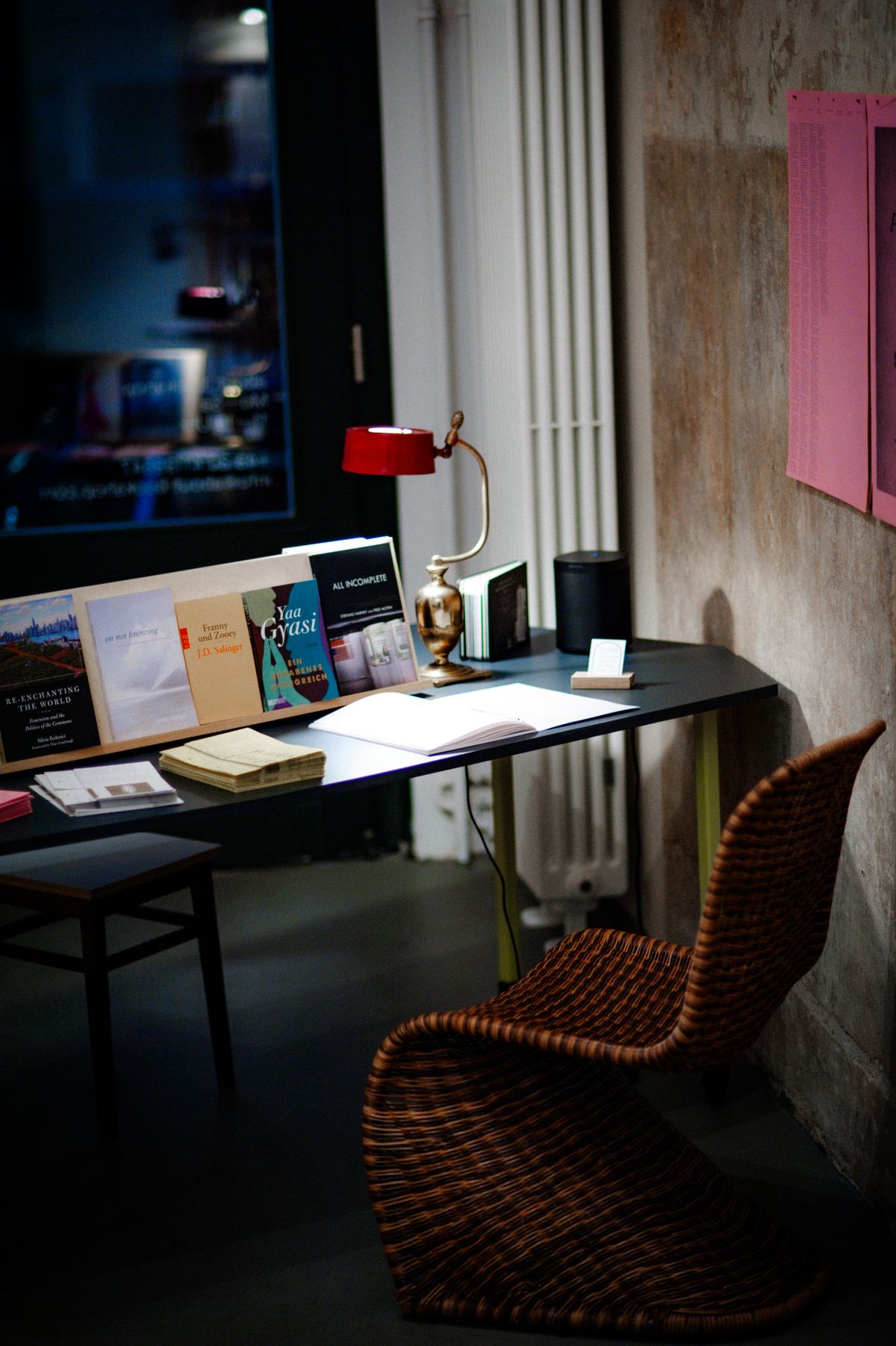
A desk that works well in daylight can feel entirely different after sunset. The ceiling light reflects in the screen, a hand casts a shadow over notes, or the bright monitor becomes the only illuminated object in the room. Start by identifying the task that is difficult to see. Buying the brightest available lamp may intensify the wrong part of the problem.
For reading printed pages, a desk lamp should illuminate the paper without shining directly into your eyes or onto the display. Try it to the side opposite your writing hand, then adjust for the layout and lamp shape. The aim is to keep your hand from blocking the light across the line you are writing.
Light the room as well as the page
A pool of strong light on an otherwise dark desk can create an abrupt contrast with the rest of the room. A modest ambient light, combined with an adjustable task lamp, often offers more control than one powerful fixture. The useful arrangement depends on the room surfaces, lamp shades and work being done.
Look at the switched-off or darkened screen from your normal seat. Reflections reveal where light sources are landing. Move the lamp, change its angle or adjust a shade before making the whole room dimmer. A bare bulb visible just above the screen can be distracting even when it does not create a direct reflection.
A lamp's adjustable joints should hold their position without drifting. Check that the base is stable, the cord reaches safely and the shade does not interfere with a moving monitor arm. Follow the fixture's instructions for bulb type and maximum rating. A shade that looks suitable is not a reason to exceed those limits.
Test the setup with actual work
Open a document, write a few lines on paper and glance between the two. Adjust the screen brightness for the room rather than leaving a setting chosen for midday sun. Increase text size when needed; brighter light alone does not fix text that is too small.
If the lamp has several color settings, choose the one that makes your work comfortable and the page clear. A color-temperature label is not a guarantee of better concentration or health. Ease of adjustment and the absence of troublesome glare matter more than a marketing description.
Keep the switches reachable from the chair and the doorway. A room should not require stepping through darkness to turn on the first useful light. Once the arrangement works, note the lamp position before moving it for cleaning. Good evening lighting is usually a set of small adjustments that work together, not a single spectacular fixture.