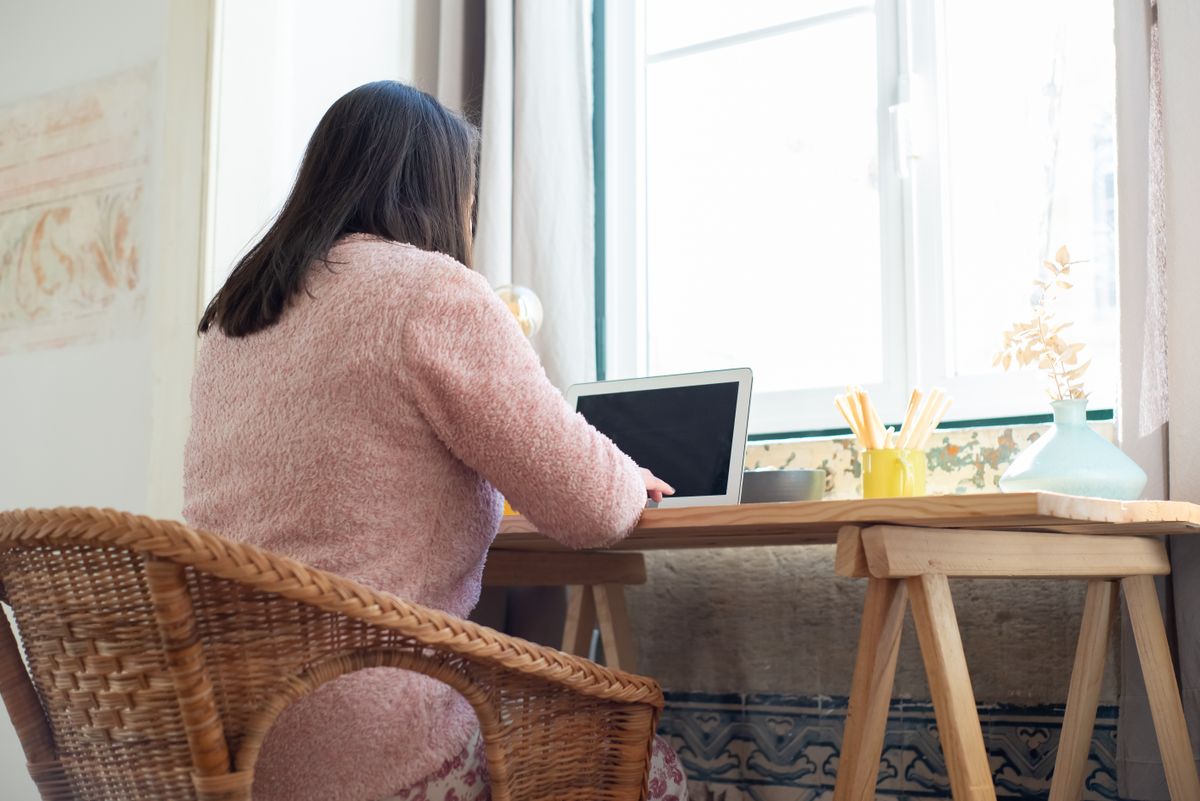
A dining table can be a perfectly useful place to answer messages, prepare a document or work through a short project. Its main complication is that it was designed around meals. The surface height, chair and lighting may suit a plate better than several hours of typing. Treat the table as a temporary station that needs a few adjustments, rather than a desk that happens to be in the kitchen.
Sit in the chair before adding accessories. With your shoulders relaxed, can you reach the keyboard without lifting your elbows or leaning against the table edge? If the surface is too high, a suitable adjustable chair may help, provided your feet remain supported. A loose pile of cushions is a poor substitute for a stable seat. If the fit remains awkward, keep the session short and use another location for sustained work.
Raise the screen only with a plan for typing
A laptop stand can improve the viewing position, but lifting the laptop also lifts its keyboard. For longer sessions, a separate keyboard and pointing device let you place the screen and hands independently. Check that the stand sits securely and that the computer's vents remain open. A laptop balanced on dining-table books may slide when you connect a cable.
Reserve enough space for the mouse, the notes you are using and your forearms. Place the charger where it will not be pulled off by a passing person or trapped under a chair leg. Avoid laying a power cord across the route between the table and the kitchen. If the available outlet makes that unavoidable, another seat or another room may be the better choice.
Make the change back to meals easy
A shallow tote or tray can hold the keyboard, notebook and small accessories between sessions. Give the laptop its own protected place rather than stacking it underneath those objects. A tray works best when its contents are limited to the current setup; filling it with unrelated stationery simply moves the clutter into a container.
Use a surface protector only if it is compatible with the table finish. Some rubber or vinyl backings can mark certain finishes, especially when left in place. Keep drinks away from the equipment and remove work papers before serving food. Wiping up a spill is much easier when invoices and cables are not part of the table setting.
For a shared household, agree on the time the table returns to ordinary use. A visible finish time is more useful than expecting others to work around an expanding collection of papers. The arrangement succeeds when setting up and packing away are small tasks, and when the table remains available for the reason it was there in the first place.