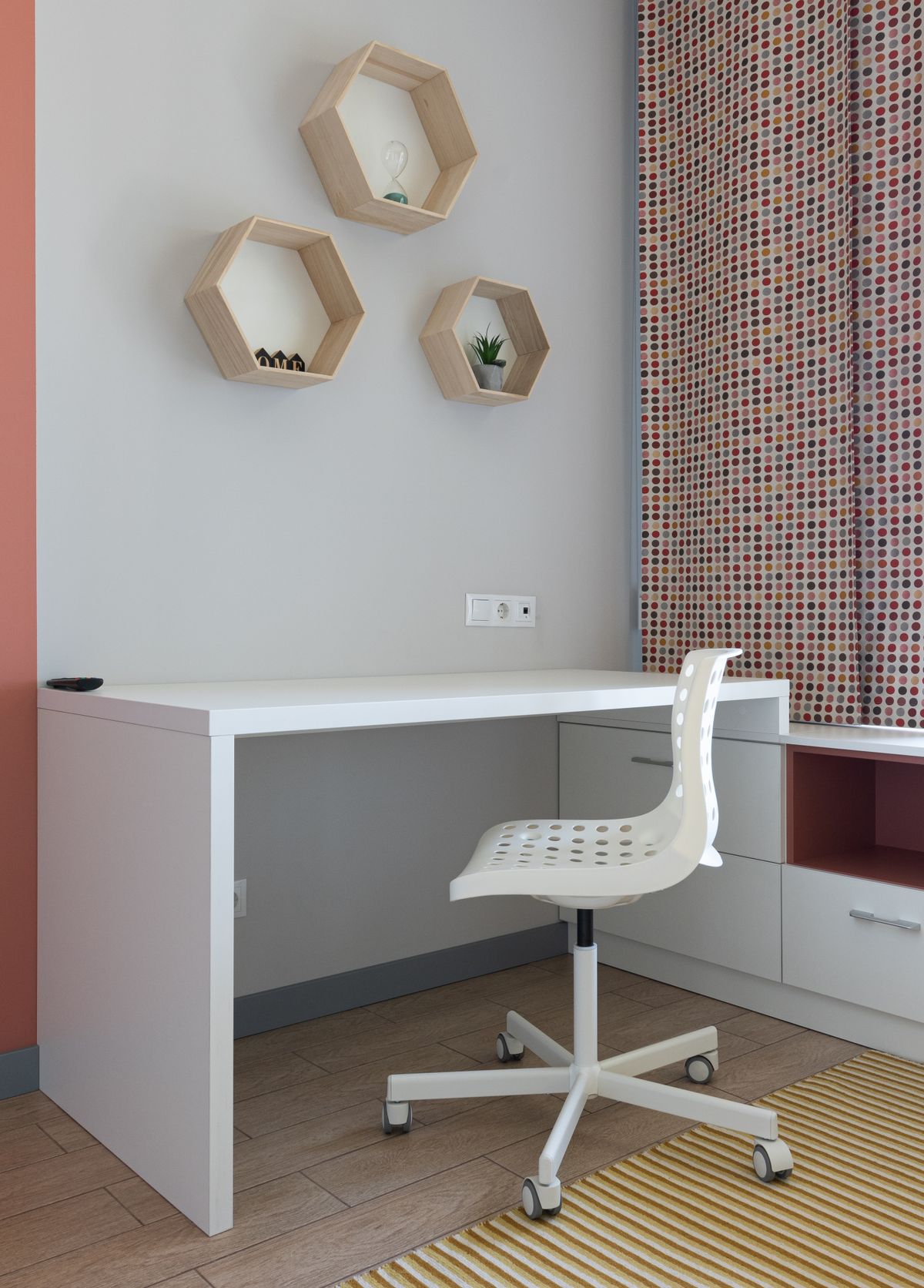
A rug can soften the appearance of a work area, but an office chair asks more of it than a coffee table does. Wheels repeatedly cross the same small zone, and the chair may catch at an edge just as someone sits down. The rug's size, pile and stability deserve attention before its appearance.
Mark the chair's normal range of movement. Include pulling back to stand, turning toward storage and moving sideways to a second work surface. A rug that ends directly under the back wheels creates a daily transition between two heights. A larger rug may avoid that edge, but only if the room and the floor can accommodate it safely.
Check the surface beneath and above
The rug must suit the floor beneath it. Use an appropriate underlay where recommended, and confirm that the backing will not mark or discolor the finish. A pad intended for one flooring type may not suit another. Follow both the rug and flooring care guidance.
Low, firm pile is often easier for a chair to move across than deep, loose pile, but the chair's casters also matter. Check the chair manufacturer's recommendations for the surface. Do not assume that replacing the wheels with any product advertised as universal will preserve compatibility.
Look for curling corners, loose fringe and folds in the likely chair path. A rug that shifts when pushed by a wheel can become a trip hazard or make standing up awkward. Do not hide a power cord beneath it to make the area look tidier.
Try movement, not just placement
If a return policy allows a suitable trial, test the rug with the actual chair and load. Move slowly through the normal working range and check whether the wheels sink, drag or gather the rug. The chair should remain stable, and ordinary movement should not require excessive effort.
A chair mat may be an alternative, but it needs its own floor compatibility and size checks. Layering a mat over an unsuitable rug can create more edges rather than solve the problem. Read the mat's instructions for the type and depth of carpet or rug it supports.
Cleaning access matters too. Choose an arrangement that lets you remove dust from the chair area without repeatedly moving a heavy desk. A rug that looks right and behaves predictably under the chair is more useful than one that demands a workaround every time you get up.